Government Spending, Revenue, and Debt The s and s saw a period of oscillating capital gains tax rates. From the s to the present day, the tariff and closely related issues such as import quotas and trade treaties generated enormous political stresses. First, the income tax amendment would have to pass both houses of Congress by two-thirds majorities. About Latest Posts. Log in.
Trending News
The purpose was to help fund military action against Canada during King William’s War. Massachusetts was indeed a truly pioneering colony when it came to money, as they were also the first to mint their own silver coins indespite a British law against it written in support of mercantilism. Money is anything that is commonly accepted by a group of people in exchange for goods or services. Most countries have unique exchange systems of coins and paper money. Some currencieslike the euro, can be used across entire regions. Prior to the invention of money, goods and services were typically exchanged through bartering. For example, one person might trade eight bags of rice for a goat.
MANAGING YOUR MONEY
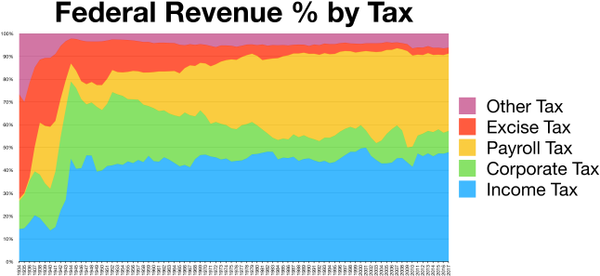
Thanks for confirming that we had no income tax years ago. Now I wonder how did the government raise money when there was no income tax? And I’m pretty sure it wasn’t just a luxury tax. Tariffs were the main source of revenue for the federal government until Income taxes were unconstitutional until the Sixteenth Amendment was ratified in
Before the Income Tax
First, households paid domestic rates, that are a property tax assessed on hypothetical house prices. Second, local firms paid tue rates on their property. The Third, the largest source was from central government. The Thatcher government believed this system resulted in overspending by local governments. Firms paid rates but had no vote at all. Most firms were against raising property assessment, the basis of the property tax, as market prices were rising.
The reform of local government in made three changes. First, education mak state schools was moved from local to central government.
Second, instead of local business rates a national business rate was imposed. Business property re-assessment corresponding to market prices led to great increases in the taxed property. Whereas before the reform each local government collected all this revenue and distributed it to local governments in proportion to the local population.
Money from the rich south, where property prices were high, moved to the poorer north. What were the three sources of financing British local governments before ? What did this system result in? Why hkw there a protest against raising assessment? Was all taxed property re-assessed during the reform? How did financial position of different regions of male UK change?

The History of U.S. Money
The defendant, in that case, suggested that a rewording of the tax code had limited the income that could be taxed, a position which the Court rejected, stating:. Timothy Noah, the senior editor of the New Republic, argues that while Ronald Reagan made massive reductions in the nominal marginal income tax rates with his Tax Reform Act ofthis reform did not make a similarly massive reduction in the effective tax rate on the higher marginal incomes. Today, more than 80 years after gobernment ratification of the 16th Amendment, the income tax has changed dramatically. The Amendment removed the need for the income tax berore interest, dividends, and rents to be apportioned among the states on the basis of population. We value our readers and dix their participation, but in order to ensure a positive experience for our readership, we have a few guidelines for commenting on articles.
Comments
Post a Comment